





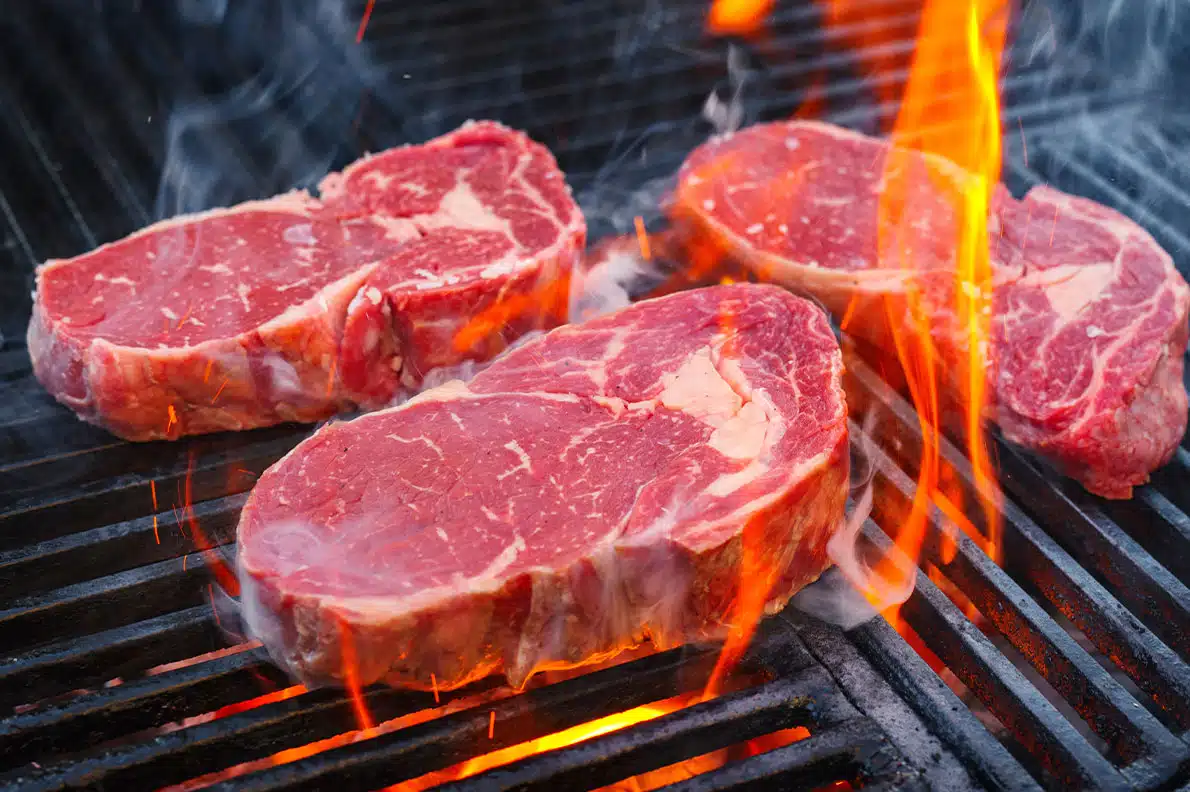



There’s a moment every steak lover dreads: you’ve spent good money on a beautiful cut of Yorkshire Dales beef, fired up the pan or the barbecue, and then… how long do you actually cook it for? Get it wrong and you’ve either got a chewy disappointment or a cold, blue centre when you wanted medium.
The good news is that cooking the perfect steak isn’t guesswork. It’s a bit of know-how, a reliable thermometer, and understanding your cut. Here’s our guide to getting it right every time.
Start with the Right Cut
Before we even talk timings, it’s worth saying: how you cook a steak depends on what steak you’re cooking. Our rump, sirloin, and ribeye all behave a little differently on the heat.
- Rump steak has great flavour and a firmer texture, so it rewards a slightly shorter, hotter cook and a generous rest.
- Sirloin is well marbled and forgiving, a great all-rounder for beginners and experienced cooks alike.
- Ribeye has the most fat running through it, so it can handle a bit more time on the heat without drying out.
Whichever cut you’ve chosen, always take it out of the fridge 30–45 minutes before cooking. A steak that goes into the pan cold will cook unevenly, giving you an overdone exterior before the centre catches up.
The Cook Level Chart
These timings are a guide for a steak roughly 2.5cm (1 inch) thick, cooked in a hot pan or on a barbecue. Thinner or thicker steaks will need adjusting up or down.
| Cook Level | Internal Temperature | Time Per Side | What to Look For |
|---|---|---|---|
| Blue | 46–49°C | 1 minute | Cool red centre, seared outside only |
| Rare | 50–52°C | 1.5 minutes | Red centre, warm throughout |
| Medium Rare | 55–57°C | 2–2.5 minutes | Pink centre, our most popular choice |
| Medium | 60–63°C | 3 minutes | Pink centre with a warmer edge |
| Medium Well | 65–68°C | 3.5–4 minutes | Slightly pink centre |
| Well Done | 70°C+ | 4.5–5 minutes | No pink, cooked through |
Why a Meat Thermometer Beats Guesswork
Ask any butcher and they’ll tell you the same thing: the “poke test” and clock-watching are useful, but nothing beats a digital probe thermometer. Steaks vary in thickness, shape, and fat content, so two steaks cooked for exactly the same time can come out completely different.
Push the probe into the thickest part of the steak, avoiding any bone or large pockets of fat, and pull it off the heat a few degrees before your target temperature. This brings us to the next crucial step.
Resting Is Not Optional
This is the step most home cooks skip, and it’s the one that makes the biggest difference. When a steak comes off high heat, the juices have been driven towards the centre. Cut into it straight away and they’ll spill straight out onto the board, leaving you with a drier bite.
Rest your steak, loosely covered with foil, for about half the time it took to cook. So a steak that took six minutes total should rest for around three. During this time, the temperature will also continue to climb by a few degrees, known as carry-over cooking, so factor that in when you pull it off the heat.
A Few Butcher’s Tips
Season generously, right before cooking. A good coating of sea salt just before it hits the pan helps develop a proper crust. Salting too far in advance can draw out moisture, though a dry brine an hour or two ahead can also work well if you have the time.
Get your pan properly hot. You want it hot enough that the steak sizzles the moment it touches down. A cast iron pan or a well-seasoned griddle holds heat best.
Don’t overcrowd the pan. Give each steak room to breathe, or you’ll steam it rather than sear it.
Baste with butter for extra flavour. In the final minute of cooking, add a knob of butter along with some thyme and a crushed garlic clove, then tilt the pan and spoon the melted butter over the steak continuously.
Slice against the grain. Once rested, always cut across the muscle fibres rather than along them. This shortens the fibres and makes every bite noticeably more tender.
Our Recommendation
For the best balance of flavour, texture, and juiciness, we always point customers towards medium rare. It allows the natural flavour of well-reared, properly hung Yorkshire Dales beef to come through, without losing any of that tenderness to overcooking.
That said, a well-cooked steak is a personal thing, and there’s no wrong answer if it’s cooked the way you enjoy it most. The key is understanding your cut, using a thermometer rather than guessing, and always giving it that all-important rest.
Pop into the farm shop or get in touch if you’d like our advice on choosing the right cut for your next meal. We’re always happy to talk steak.