






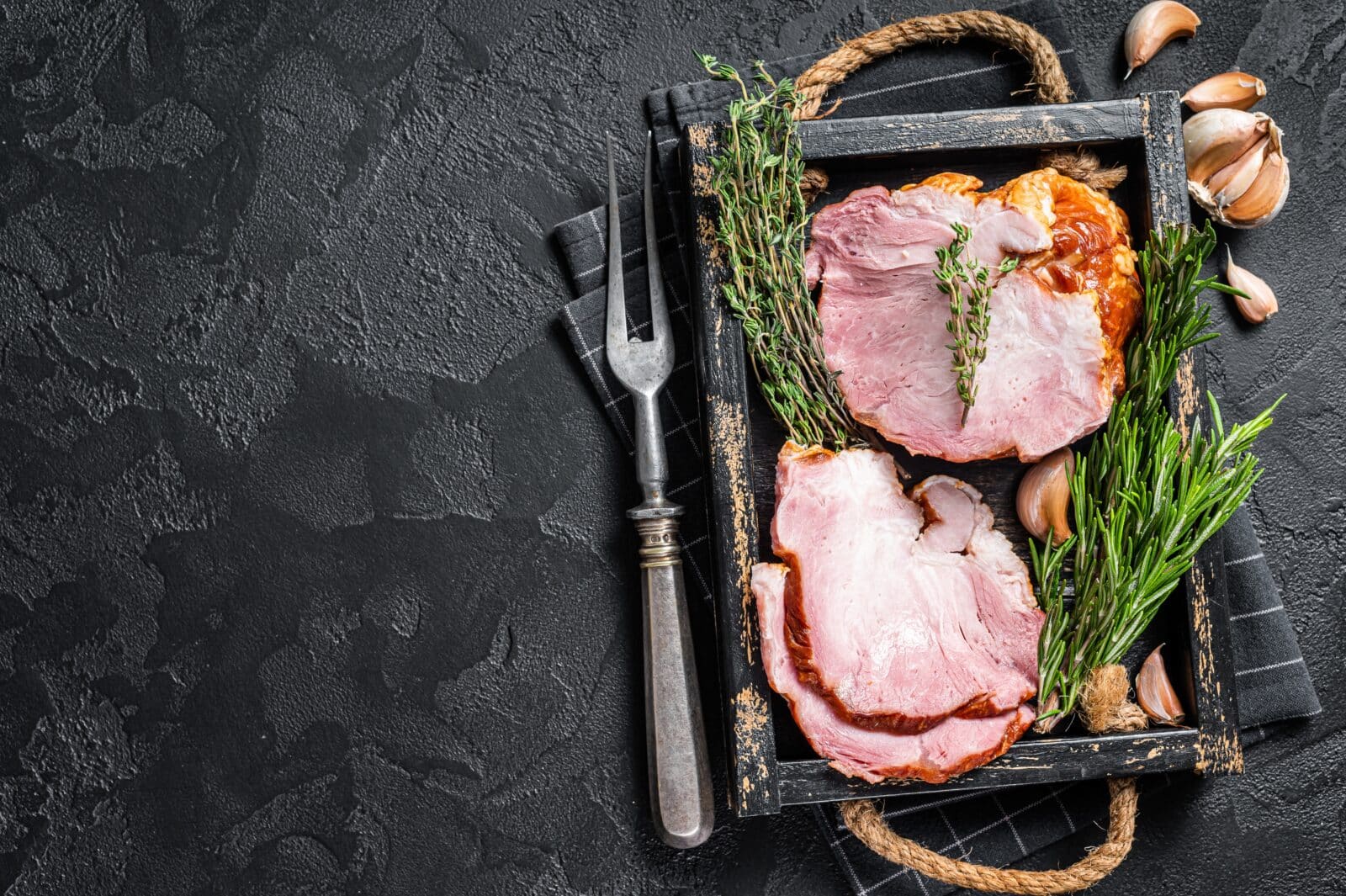
For a lot of Yorkshire families, Christmas isn’t complete without a gammon. Sometimes it’s alongside the turkey breast, sometimes it’s the star of Boxing Day, and it’s always the reason the fridge is full of sandwich fillings until New Year.
The good news is that gammon is one of the easiest joints to get right. Here’s how our butchers cook theirs and how to cook a gammon joint for Christmas, from soaking to that sticky, golden glaze.

Gammon or ham: what’s the difference?
Gammon is pork from the hind leg that’s been cured. Once it’s cooked, most of us call it ham. When you buy a gammon joint, you’re buying the joint you’ll turn into your Christmas ham.
Which gammon joint should you buy?
Our gammon horseshoe joints come in 1kg, 2kg and 3kg sizes. They’re boneless, easy to carve, and one of our best sellers every Christmas. 1kg typically feeds 5-6 people based on a standard meal.
If you want plenty of leftovers for Boxing Day, go up a size. Cold ham keeps well, and there are far worse problems to have than too much gammon!
Steps on how to cook a gammon joint
Step 1: Soak it overnight
Gammon is cured with salt, so we recommend soaking it in cold water overnight before you cook it. This draws out some of the salt and gives you a more tender, better-balanced joint. Use a big pan, keep it somewhere cool, and make sure the joint is fully covered.
Step 2: Work out your cooking time
Weigh your joint and allow about 20 minutes per 450g, plus an extra 20 minutes. As a guide:
| Joint size | Total cooking time |
| 1kg | About 1 hour 5 minutes |
| 2kg | About 1 hour 50 minutes |
| 3kg | About 2 hours 30 minutes |
You’ll split this time between boiling and roasting, so it’s worth writing it down before you start.
Step 3: Boil for half the time
Drain the soaking water and put the gammon in a large pan. Add a halved onion, a couple of bay leaves and a few peppercorns, then cover with fresh cold water. Bring it to the boil, turn it down to a gentle simmer, and cook for half your total time. Skim off any froth that rises to the top.
Keep the cooking liquid. It makes a brilliant base for pea and ham soup after Christmas.
Step 4: Take off the skin and score the fat
Lift the gammon out and let it cool for a few minutes until you can handle it. Cut away the skin, leaving a good layer of fat underneath. Then score the fat in a diamond pattern, cutting through the fat but not into the meat. This helps the glaze sink in and crisp up.
Step 5: Glaze and roast
Heat your oven to 180°C (160°C fan, Gas Mark 4). Put the gammon in a foil-lined roasting tin, cover it loosely with foil, and roast for the rest of your cooking time. For the last 20 to 30 minutes, take off the foil, brush on the glaze and let it turn sticky and golden. Brush on a second layer halfway through if you like it extra glossy.
Let it rest for 15 minutes before you carve.
How to cook honey glazed gammon
Our honey glaze is the one we come back to every year. It’s simple, and it works with any size of joint.
- 4 tbsp runny honey
- 2 tbsp wholegrain mustard
- 2 tbsp soft brown sugar
- A handful of whole cloves (optional)
Mix the honey, mustard and sugar together. If you’re using cloves, press one into the centre of each diamond before you brush on the glaze.
Want to mix it up? Swap the honey for maple syrup, or add a splash of orange juice and some zest for a festive twist.
How to serve gammon
Serve your gammon hot with the Christmas trimmings or let it cool and slice it for Boxing Day with pickles, chutney and a good crusty loaf. Looking for trimming ideas? Our guide to the perfect Christmas dinner side dishes has you covered.
Once it’s cooled, cover any leftovers and get them into the fridge within one to two hours. Eat them within two days or freeze them for later.
Order Christmas gammon joints
Our gammon horseshoe joints are available to order now in 1kg, 2kg and 3kg sizes. Choose the delivery date that suits you, or collect from Mill Close Farm Shop at Hackforth, near Bedale.
Having beef as well? Our guide to the best beef joints for roasting will help you choose.